Isha Netralaya | Best Eye Hospital in Mumbai & Pune | Eye Specialist
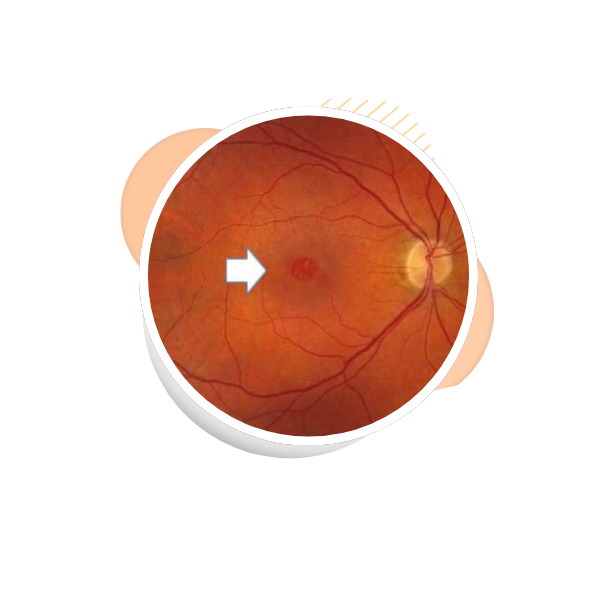
A macular hole is a small opening or defect in the macula, which is the central part of the retina responsible for sharp, detailed vision.
The macula helps us:
Read
Recognise faces
See fine details
Perform tasks requiring clear central vision
When a hole develops in the macula, central vision becomes blurred or distorted, while side (peripheral) vision usually remains normal.
The retina works like a camera sensor, and the macula is its most sensitive centre.
Even a small problem in the macula can cause noticeable vision difficulties.
A macular hole mainly affects:
Reading vision
Straight-line vision
Fine detail work
Macular holes usually develop due to age-related changes inside the eye, but other causes include:
Ageing (most common cause, usually after 50 years)
Shrinkage of the vitreous gel inside the eye
Eye injury or trauma
High myopia (high minus power)
Previous eye surgery
Advanced diabetic eye disease
Retinal swelling or inflammation
Most macular holes are not caused by infection or pain.
Symptoms usually develop gradually and may worsen over time:
Blurred central vision
Distortion of straight lines (they appear bent or wavy)
Difficulty reading small print
A dark or empty spot in the centre of vision
Reduced clarity while recognising faces
⚠️ Peripheral (side) vision usually stays normal.
Mild distortion or blurring
No complete hole yet
Early detection is important
Small break in some layers of the macula
Increasing visual distortion
Complete opening through the macula
Significant central vision loss
The earlier the condition is detected, the better the visual outcome.
You may be at higher risk if you:
Are above 50 years of age
Have high minus power
Have diabetes
Had previous eye surgery or trauma
Have retinal disorders in the other eye
If one eye has a macular hole, the other eye also needs regular monitoring.
Diagnosis is done using:
Detailed retinal examination
Optical Coherence Tomography (OCT) – a painless scan that shows a clear cross-section of the macula
OCT is the most important test for confirming a macular hole and assessing its stage.
A macular hole does not heal on its own in most cases.
Management depends on:
Size of the hole
Stage of the condition
Duration of symptoms
Early evaluation helps in planning timely care and preventing further vision loss.
Vision improvement depends on how early the macular hole is detected
Central vision may take time to improve
Regular follow-ups are essential
Peripheral vision usually remains unaffected
Prompt diagnosis greatly improves the chances of visual recovery.
Consult an eye specialist immediately if you notice:
Sudden distortion of straight lines
Blurring in the centre of vision
Difficulty reading despite clear glasses
Early action can protect long-term vision.
A macular hole is a small tear or gap in the macula, the central part of the retina that is responsible for sharp, detailed central vision. It can cause blurred or distorted vision in the affected eye.
Symptoms of a macular hole include blurry central vision, a dark spot in the center of vision, and distorted lines or shapes. It can make activities like reading or driving difficult.
A macular hole is diagnosed through a comprehensive eye exam, including imaging tests like optical coherence tomography (OCT), which allows the doctor to see detailed images of the retina.
Macular holes most often occur due to age-related changes in the vitreous (the gel-like substance inside the eye) that causes it to pull away from the retina. Other causes include eye injury or certain eye diseases.
Small macular holes may improve on their own in some cases, but larger holes usually require surgical intervention to restore or preserve vision.