Isha Netralaya | Best Eye Hospital in Mumbai & Pune | Eye Specialist



- 25+ Years of Excellence in Cornea & Refractive Care
Providing trusted corneal treatments since 2000. - 60,000+ Successful Corneal Surgeries
One of the leading centers for keratoplasty in Maharashtra. - Expert Cornea Team
Led by Dr. Sonal Shah, Dr. Lomesh Patil, Dr. Siddharth Sheth, Dr. Nazma Kazi, Dr. Mrunal Upasani, and Dr. C.P. Mashil — specialists in cornea & refractive surgery. - Comprehensive Cornea Services Under One Roof
From transplants to advanced imaging, dry-eye care, infections, and laser procedures. - Advanced Corneal Imaging & Topography
Accurate diagnosis for precise and personalized treatment. - State-of-the-Art Keratoplasty (Corneal Transplant)
Restoring vision with modern surgical techniques and high success rates. - Dedicated Eye Bank Services
Ensuring timely availability of high-quality donor corneas. - Specialized Treatment for Dry Eye & Ocular Surface Disorders
Modern therapies for long-term comfort and clarity. - Corneal Laser Procedures (PTK)
Advanced laser treatment for scars, irregularities, and corneal surface issues.
What is the Cornea?
- The cornea is the clear, front surface of your eye that helps focus light and is essential for clear vision.
- At Isha Netralaya, our fellowship-trained cornea specialists diagnose and treat simple to complex corneal diseases, using advanced technology and modern surgical techniques to protect and restore your sight.
Why Choose Isha Netralaya for Corneal Diseases?
✔ Experienced and fellowship-trained cornea specialists
✔ Latest diagnostic equipment and advanced imaging systems
✔ Complete range of medical, laser, and surgical cornea treatments
✔ Expertise in managing severe infections, corneal ulcers, and complex cases
✔ Modern operation theatres equipped for advanced corneal transplant procedures
✔ Dedicated Dry Eye and Keratoconus clinics
✔ High success rates in therapeutic and optical keratoplasty
✔ Ethical, transparent communication with clear patient counselling
✔ Strong post-operative follow-up care and long-term monitoring
Common Corneal Problems We Treat
Our cornea team successfully manages a wide range of conditions, including:
• Caused by bacteria, fungus, viruses, or parasites
• Symptoms: redness, pain, watering, discharge, reduced vision
• Can progress rapidly if untreated
• Requires immediate medical attention
• Due to poor tear production or unstable tear film
• Symptoms include irritation, foreign-body sensation, burning, and blurred vision
Management options:
• Lubricating eye drops
• Punctal plugs
• IPL / Meibomian gland therapy
• Lifestyle and screen-use modifications
• Open sores on the cornea caused by infection, trauma, or contact lens misuse
• May lead to scarring and permanent vision loss
• Requires urgent treatment with antibiotic or antifungal medications
• Progressive thinning and bulging of the cornea
• Causes irregular astigmatism and distorted vision
Treatment options at Isha Netralaya:
• C3R / Corneal Cross-Linking (CXL)
• Specialized contact lenses (RGP, scleral lenses)
• Corneal transplant for advanced stages
• Genetic conditions affecting corneal clarity
• Lead to cloudy, blurred, or fluctuating vision
Possible treatments:
• Medications and lubricants
• Superficial keratectomy or laser polishing
• Partial or full-thickness corneal transplant when required
• Caused by past infections, trauma, or chemical burns
• Result in decreased transparency and poor vision
Treatment options:
• Vision correction with glasses or contact lenses
• Keratoplasty (corneal transplant) for long-term visual rehabilitation
• Common after cataract surgery or in Fuchs’ Endothelial Dystrophy
• Causes hazy vision and glare
Management includes:
• Hypertonic eye drops
• Endothelial keratoplasty (DSEK / DMEK) when needed
Symptoms of Corneal Diseases
Consult a cornea specialist urgently if you experience:
• Eye redness or irritation
• Eye pain or discomfort
• Sensitivity to light (photophobia)
• Blurred or cloudy vision
• Excessive watering or discharge
• Foreign-body sensation in the eye
• Difficulty opening eyes
• Poor night vision
Early diagnosis can prevent serious damage, scarring, and vision loss.

Cornea Diagnosis at Isha Netralaya
We utilize state-of-the-art diagnostic technology for precise corneal assessment:
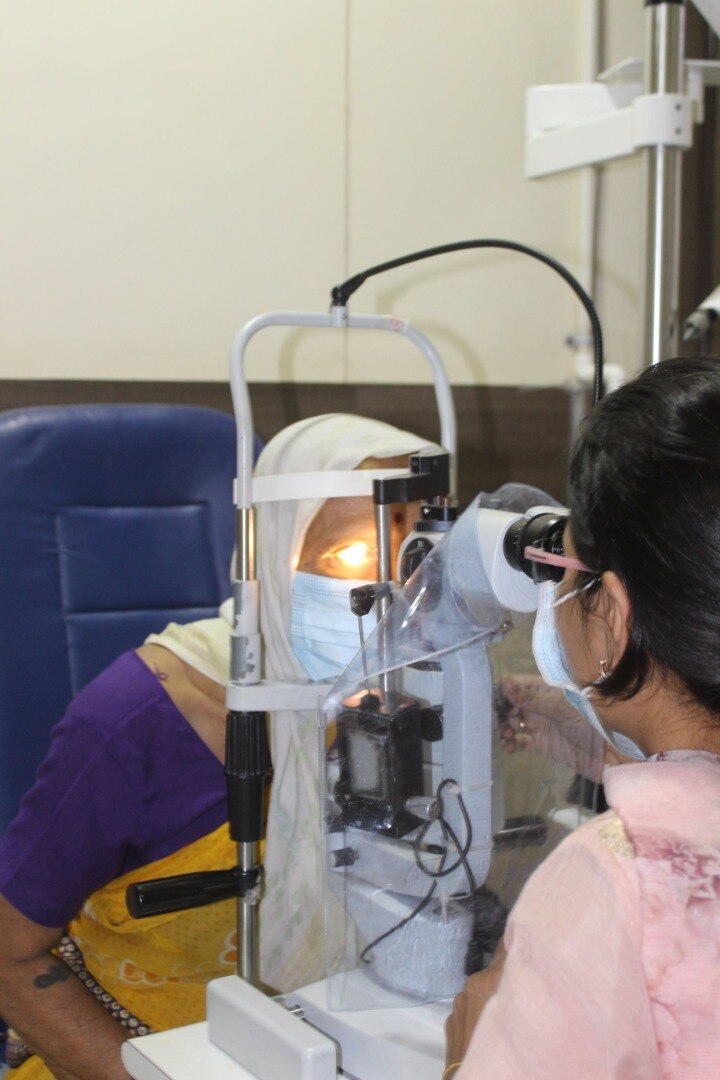
Slit-lamp biomicroscopy for detailed eye examination
- Corneal topography and tomography for curvature mapping
- Pachymetry to measure corneal thickness
- Specular microscopy for endothelial cell evaluation
- Tear film analysis for dry-eye diagnosis
- OCT imaging for high-resolution corneal scans
- Microbiological smear and culture testing for infections
- Pentacam 3D corneal analysis, especially important for keratoconus detection
Cornea Treatment Options at Isha Netralaya
1. Medical Management
- Antibiotic, antifungal, and antiviral eye drops
- Anti-inflammatory medications
- Lubricating and tear-replacement therapy
- Immunomodulatory treatments when required
2. Non-Surgical Procedures
- Collagen Cross-Linking (C3R / CXL)
- Bandage contact lenses for healing & pain relief
- Advanced dry eye therapies including IPL and TearCare
- Amniotic membrane graft (AMG) for non-healing epithelial defects
- Corneal surface debridement and laser polishing
3. Surgical Cornea Services
» Corneal Transplant (Keratoplasty)
- Penetrating Keratoplasty (PK) – full-thickness transplant
- DSEK / DSAEK – partial-thickness endothelial transplant
- DMEK – ultra-thin endothelial layer transplant with faster recovery
- Lamellar Keratoplasty (ALK / DALK) – selective layer replacement
» Therapeutic Keratoplasty
Used for severe corneal ulcers, melting cornea, or perforations to preserve the eye.
» Corneal Repair Procedures
Treatment of injuries, perforations, and chemical burns to restore corneal integrity.
» Pterygium Surgery
- Safe removal of conjunctival growth from the cornea
- Performed using glue and advanced techniques for faster healing and low recurrence
- Fellowship-trained cornea specialists
- Emergency infection and ulcer management services
- Pentacam-based cornea mapping and treatment planning
- Comprehensive dry eye evaluation & treatment center
- Eye bank coordination for corneal transplants
- Dedicated keratoconus and corneal ulcer clinics
- Personalized treatment protocols for every patient
- Continuous redness or eye pain
- Sudden decrease in vision
- Chemical splash or eye trauma
- Recurrent eye infections
- Difficulty wearing contact lenses
- Diagnosed keratoconus, corneal dystrophy, or corneal opacity
- Chronic dry eye symptoms not improving with routine treatment
FAQs for Cornea Treatment
Cornea treatment refers to various medical procedures designed to address issues affecting the cornea, the transparent front layer of the eye. Treatment may involve medications, surgeries, or specialized therapies depending on the condition, such as infections, injuries, or degenerative diseases.
Common conditions that may require cornea treatment include corneal infections (keratitis), corneal ulcers, keratoconus, Fuchs' dystrophy, corneal scarring, and dry eyes.
Symptoms of corneal issues can include blurry or distorted vision, eye pain, redness, sensitivity to light, and excessive tearing. If you experience any of these, it is essential to seek prompt evaluation by an eye specialist.
A cornea condition is diagnosed through a comprehensive eye exam that includes visual acuity tests, corneal topography, and sometimes corneal imaging techniques like pachymetry or confocal microscopy to assess corneal thickness and structure.
At Isha Netralaya, we offer a wide range of cornea treatments, including:
- Medications (antibiotics, anti-inflammatory eye drops)
- Corneal cross-linking for keratoconus
- Corneal transplantation (penetrating keratoplasty, DSAEK, DMEK)
- Advanced laser procedures
- Dry eye management
- Stem cell therapy for corneal regeneration
Corneal transplantation, also known as keratoplasty, is a surgical procedure where a damaged or diseased cornea is replaced with healthy donor tissue. It is used for conditions like corneal scarring, keratoconus, and certain corneal infections.
A corneal transplant is recommended if your cornea is severely damaged or diseased, causing vision loss that cannot be corrected with glasses, contact lenses, or less invasive treatments. An eye specialist will assess the condition and guide you through your options.
Corneal cross-linking is a non-invasive treatment for keratoconus that strengthens the cornea to halt its progressive thinning and bulging. It is suitable for patients diagnosed with early to moderate keratoconus.
Most corneal treatments, especially those involving medications or non-invasive procedures, are relatively painless. Surgical treatments like corneal transplants may cause mild discomfort post-surgery, which can be managed with medications.
Recovery time depends on the type of treatment. For medication-based treatments, recovery can be within days to weeks. After corneal transplant surgery, full recovery may take several months as the eye heals, although vision improvement may be noticeable earlier.
Many corneal conditions, especially infections, can be prevented through proper eye hygiene, wearing protective eyewear, and avoiding contact with contaminated surfaces. Regular eye check-ups can also help in early detection and management of corneal diseases.
Most insurance plans cover corneal treatments, including surgeries, depending on the specific condition and treatment required. We recommend checking with your insurance provider for details or contacting Isha Netralaya’s billing department for assistance.
You can schedule an appointment at Isha Netralaya by calling our clinic or booking online through our website. Our team will assist you in setting up a consultation with a cornea specialist.
During the consultation, your eye specialist will conduct a thorough eye examination, discuss your symptoms, review your medical history, and recommend appropriate diagnostic tests or treatments for your specific corneal condition.
During the consultation, your eye specialist will conduct a thorough eye examination, discuss your symptoms, review your medical history, and recommend appropriate diagnostic tests or treatments for your specific corneal condition.


