
Isha Netralaya | Best Eye Hospital in Mumbai & Pune | Eye Specialist

Your eyes help you see the world every day, but some eye problems can develop silently without causing pain. One of the most important parts of your eye is the retina, which sends visual signals to your brain.
If the retina becomes damaged, it can affect your vision permanently if not treated on time. The good news is that many retinal problems can be managed successfully when detected early.
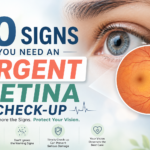
Here are 10 warning signs that you should never ignore.
- You Suddenly Notice More Floaters
Do you see tiny black dots, cobwebs, or thread-like shapes moving across your vision?
A few floaters are common as you get older. However, if you suddenly notice many new floaters, it could be a sign of a retinal problem.
👉 Visit a retina specialist in Thane as soon as possible.
- You See Flashes of Light
Have you noticed quick flashes or lightning-like streaks, especially in the dark?
These flashes may happen when the retina is being pulled or torn.
This is not something you should ignore.
- A Dark Shadow Covers Part of Your Vision
If it feels like a curtain or shadow is moving across your vision, it may be a sign of retina detachment, which is an eye emergency.
Immediate treatment can help save your eyesight.
- Your Vision Suddenly Becomes Blurry
If your vision becomes blurry without any obvious reason, don’t assume it’s just because you’re tired.
Blurred vision can sometimes be an early sign of retinal disease.
- You’re Finding It Hard to See from the Sides
If you notice that your side vision is reducing, it could mean your retina needs immediate attention.
Early diagnosis can prevent further vision loss.
- Straight Lines Look Bent or Wavy
Do door frames, window edges, or text appear bent?
This may indicate a problem with the central part of your retina (macula) and should be checked by a retina specialist.
- You Suddenly Lose Vision in One Eye
Sudden vision loss is always an emergency.
Never wait for it to improve on its own.
Visit a retina hospital in Thane immediately.
- You Have Diabetes
If you have diabetes or any other systemic diseases like hypertension, heart disease or kidney problem, your eyes may be affected even before you notice any symptoms.
Regular retina check-ups in Thane can detect diabetic eye disease early and help protect your vision.
- You Recently Injured Your Eye
Even a minor injury from sports, a fall, or an accident can damage the retina.
If you’ve had an eye injury, it’s a good idea to get your retina examined.
- You Have a High Spectacle Number
People with a high minus power (high myopia) have a greater chance of developing retinal tears or retina detachment.
Regular eye examinations can help detect problems before they become serious.
Why Is an Early Retina Check-Up Important?
Many retinal diseases don’t cause pain or obvious symptoms in the beginning.
An early retina examination can help:
- Detect problems before vision is affected
- Prevent permanent vision loss
- Start treatment at the right time
- Protect your eyesight for the future
When Should You Visit a Retina Specialist?
Don’t wait if you experience:
- Sudden floaters
- Flashes of light
- Blurred vision
- A curtain-like shadow
- Loss of side vision
- Sudden vision loss
- Vision changes if you have diabetes
The earlier you seek treatment, the better your chances of protecting your vision.
Retina Check-Up | Retina Specialist | Retina Specialist Near Me | Retina Eye Check-Up | Retina Examination | Retina Disease Symptoms | Urgent Retina Check-Up | Eye Retina Problems | Retina Treatment | Retina Hospital | Retinal Detachment Symptoms | Diabetic Retinopathy Symptoms | Retina Scan | Dilated Eye Examination | Retina Specialist in Thane | Best Retina Hospital in Thane | Retina Treatment in Thane | Retina Surgeon in Thane | Retina Check-Up in Thane | Eye Hospital in Thane

FOR CHECKUP APPOINTMENT CALL
+91 8657705131
Frequently Asked Questions
Yes, cataract surgery is usually covered under mediclaim and most health insurance policies. Cashless facility may also be available depending on your insurance provider and policy terms.
If you experience blurry vision, difficulty seeing at night, halos around lights, or frequent changes in prescription glasses, you might have cataracts. An eye examination by our specialists at Isha Netralaya can confirm if surgery is required.
Yes, cataract surgery is one of the safest and most effective surgical procedures. At Isha Netralaya, we use advanced technology to ensure precision and safety during the surgery.
Cataract surgery can significantly improve your vision, enhance your quality of life, and reduce the risk of falls and accidents due to poor vision.
We offer advanced cataract surgery options, including laser-assisted cataract surgery and premium intraocular lens (IOL) options, to ensure the best outcomes for our patients.
The procedure typically takes about 10-15 minutes. However, you should plan for a few hours at the clinic to allow for preparation and post-operative recovery.
Cataract surgery is generally painless. Local anesthesia is used to numb the eye, and patients usually experience minimal discomfort during and after the procedure.
Most patients experience improved vision within a few days after surgery. Full recovery may take about 4 to 6 weeks, during which you will need to follow specific post-operative care instructions.
Many patients experience reduced dependence on glasses after cataract surgery, especially with advanced lens options. However, some may still need glasses for reading or distance vision.
Cataract surgery is highly successful, but as with any surgery, there are risks, including infection, bleeding, or vision problems. At Isha Netralaya, we take every precaution to minimize risks.
We offer a variety of intraocular lenses (IOLs), including monofocal, multifocal, and toric lenses, depending on your specific vision needs and lifestyle.
You can usually return to most daily activities within a few days, but it’s important to avoid strenuous activities and protect your eyes as they heal. Your doctor will provide detailed guidelines based on your recovery progress.
After surgery, avoid rubbing your eyes, heavy lifting, swimming, and exposure to dust or smoke. Follow the care instructions provided by your surgeon for a smooth recovery.
The cost of cataract surgery varies depending on the type of procedure and lens used. Please contact us directly for an estimate based on your specific needs.
You can book an appointment online through our website, call us at our clinic, or visit Isha Netralaya to schedule your consultation with one of our cataract specialists.